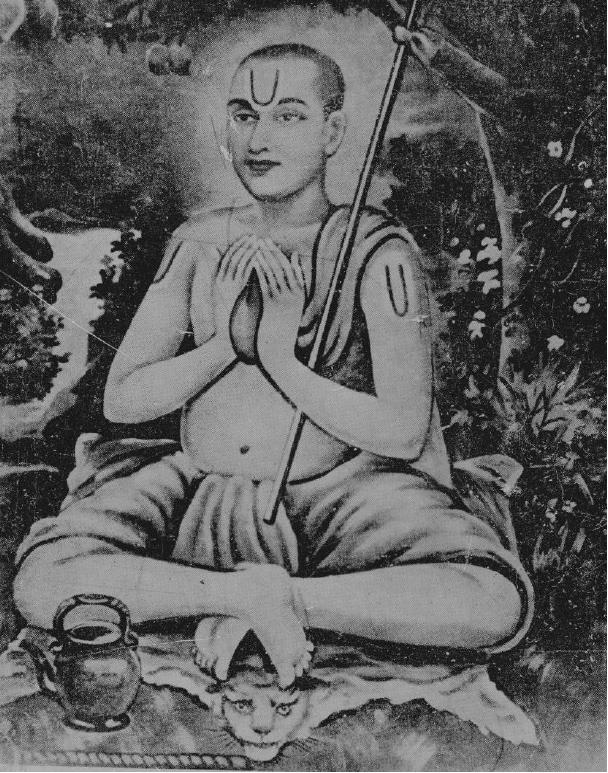
| Narayana Teertha (1675 - 1745)
Sri Narayana Teertha, ascetic and scholar, was born in Andhra
Desa. Prior to his ascetic vow (Sanyasam), his name was Tallavajjhala
Govinda Sastry.
Attaining mastery over all the six Sastras, he went to Varanasi,
the seat of sages and learned men, to propagate his spiritual
knowledge and philosophy. After some years he settled down at
Varahur on the banks of the Kaveri in Tamil Nadu. On the way
down to south, he visited several holy places and sang the glory
of the deities graced in different temples .
As he was an ardent devotee of Sree Krishna,he encapsulated his
spontaneous outpourings in " Tarangas' . Sree Krishna Leela Tarangini, his
magnum opus is an unparalleled musical treatise consisting many Slokas and Krutis in 12 chapters known asTarangas. These compositions, famous
for lyrical richness and beauty of rhythm, evoke the nine 'Rasas'
and form an integral part of Indian classical dance and music.
The Tarangas depict the life and childhood pranks (leelas) of
Sree Krishna and culminate in the auspicious wedding "Rukmini Kalyanam".
Leela Suka's "Sree Krishna Karnamrutham", Jayadeva's "Geeta
Govindam" and Narayana Teertha's "Sree Krishna Leela Tarangini"
constitute the precious triumvirate that elevate the devout to
a world of spiritual ecstasy
|